It’s More than Play!
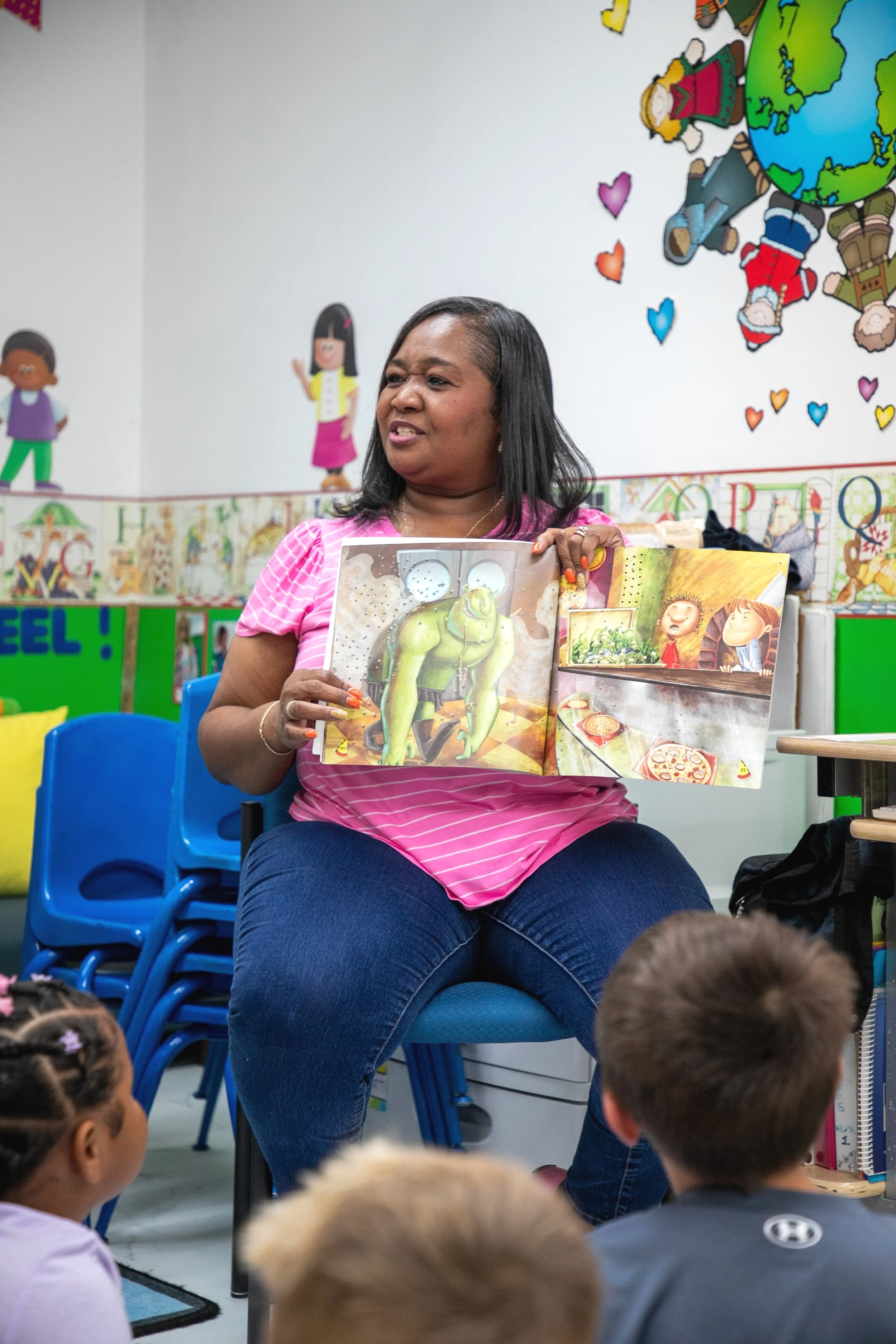
NC Pre-K Teacher, Stephanie Anderson, sharing a story with her students
When many people picture a preschool classroom, they see children building with blocks, painting pictures, singing songs, and playing with friends. While those activities are certainly part of the day, what most people don't see is the tremendous amount of planning, preparation, and professional expertise that happens behind the scenes.
Early childhood educators do far more than supervise children. They are teachers, observers, coaches, communicators, and advocates who work every day to build the foundation for a child's future success.
Intentional Planning Makes Learning Possible
Every activity in a high-quality preschool classroom is carefully planned with a purpose.
When children are building towers with blocks, they are learning math, problem-solving, and spatial awareness. During dramatic play, they are developing language, social skills, and creativity. Even snack time provides opportunities to practice independence, communication, and healthy habits.
Teachers spend hours planning lessons and experiences that align with children's developmental needs while making learning engaging and fun. They continually ask themselves:
What skills are children working on?
How can I support individual learning needs?
What experiences will help children grow socially, emotionally, physically, and academically?
Behind every seemingly simple activity is a thoughtful teacher who has carefully designed opportunities for learning.
Assessment Is More Than a Test
Many people are surprised to learn that preschool teachers regularly assess children's development.
Unlike traditional tests, early childhood assessments often take place through observation. Teachers document children's growth by watching them interact, solve problems, communicate, and engage in learning experiences throughout the day.
These observations help teachers understand:
What children already know
What skills they are developing
Where additional support may be needed
How to individualize instruction
Assessment allows teachers to celebrate progress and ensure every child is receiving the support they need to succeed.
Strong Partnerships with Families Matter
One of the most important parts of an early childhood educator's job happens outside the classroom.
Teachers regularly communicate with families about children's progress, milestones, strengths, and needs. They share strategies families can use at home and work together to support children's development.
Research consistently shows that when families and educators partner together, children benefit.
These relationships require time, trust, and ongoing communication. Whether through conferences, phone calls, newsletters, family engagement activities, or daily conversations, teachers work hard to keep families connected to their child's learning journey.
Learning Never Stops for Teachers
Great teachers are lifelong learners.
Early childhood educators participate in ongoing professional development to stay current on best practices, child development research, curriculum implementation, classroom management strategies, and family engagement approaches.
Many attend workshops, complete training requirements, participate in coaching opportunities, and collaborate with colleagues throughout the year.
Just as we expect children to grow and learn, educators continually invest in improving their own skills so they can provide the highest quality experiences for children.
The Classroom Environment Is a Teacher, Too
Walk into a high-quality preschool classroom and you may notice colorful learning centers, books within children's reach, engaging materials, and inviting spaces for exploration.
What you may not realize is that every aspect of that environment has been intentionally designed.
Teachers carefully arrange materials and spaces to encourage independence, curiosity, creativity, and social interaction. They observe how children use the environment and make adjustments throughout the year to support learning and development.
The classroom itself becomes a powerful teaching tool.
A Profession Worth Celebrating
Early childhood educators play a critical role in shaping children's futures. They help children develop confidence, curiosity, resilience, communication skills, and a love of learning that can last a lifetime.
The next time you see a preschool classroom filled with children playing, laughing, and exploring, remember that there is much more happening beneath the surface. Behind every successful classroom is a dedicated professional using knowledge, skill, and passion to help young children thrive.
At Rockingham County Partnership for Children, we are proud to support the educators who do this important work every day. Their dedication helps build stronger children, stronger families, and a stronger community for all.